Soda Blasting vs Sandblasting: What's the Difference and Which Should You Use?
If you're researching abrasive cleaning methods, you've likely come across both soda blasting and sandblasting and wondered which one is right for your project. While both techniques remove coatings, contaminants, and residues from surfaces, they use different media and operate at different pressures which means they're suited for very different applications. Homeowners and property managers across the Wichita metro area often face this choice when dealing with mold remediation, fire damage restoration, or stripping paint from delicate surfaces. As an IICRC-certified restoration company, we use both methods depending on the job, and understanding the core differences will help you choose the right approach for your specific needs. This post breaks down the key distinctions: the media used, surface damage potential, cleanup requirements, typical applications, and cost considerations.
What Are Soda Blasting and Sandblasting?
Both soda blasting and sandblasting are abrasive blasting techniques that propel media at high velocity to clean, strip, or prepare surfaces. The fundamental difference lies in the media itself and the hardness scale.
Sandblasting uses silica sand, crushed glass, aluminum oxide, or steel grit as the abrasive material. These media are hard, angular, and aggressive they cut into surfaces to remove rust, thick coatings, and scale from metal, concrete, and masonry. Sandblasting operates at higher pressures (typically 80110 PSI) and creates an anchor pattern on surfaces, which is ideal for paint adhesion on industrial equipment or structural steel.
Soda blasting uses sodium bicarbonate (baking soda) as the soda blasting media. This medium is softer, water-soluble, and non-toxic. It works at lower pressures (typically 2040 PSI) and is designed to remove contaminants without damaging the underlying substrate. Baking soda vs sand blasting comes down to gentleness: soda blasting won't warp thin metal, strip wood grain, or etch glass, making it the preferred choice for automotive restoration, wood framing cleanup, and mold removal where you need to preserve the surface integrity.
The choice between these methods isn't about which is "better" overall it's about matching the technique to the material and the goal.
Applications: When to Use Each Method
Choosing between soda blasting and sandblasting depends on what you're cleaning and what condition you want it in afterward.
Soda blasting applications include:
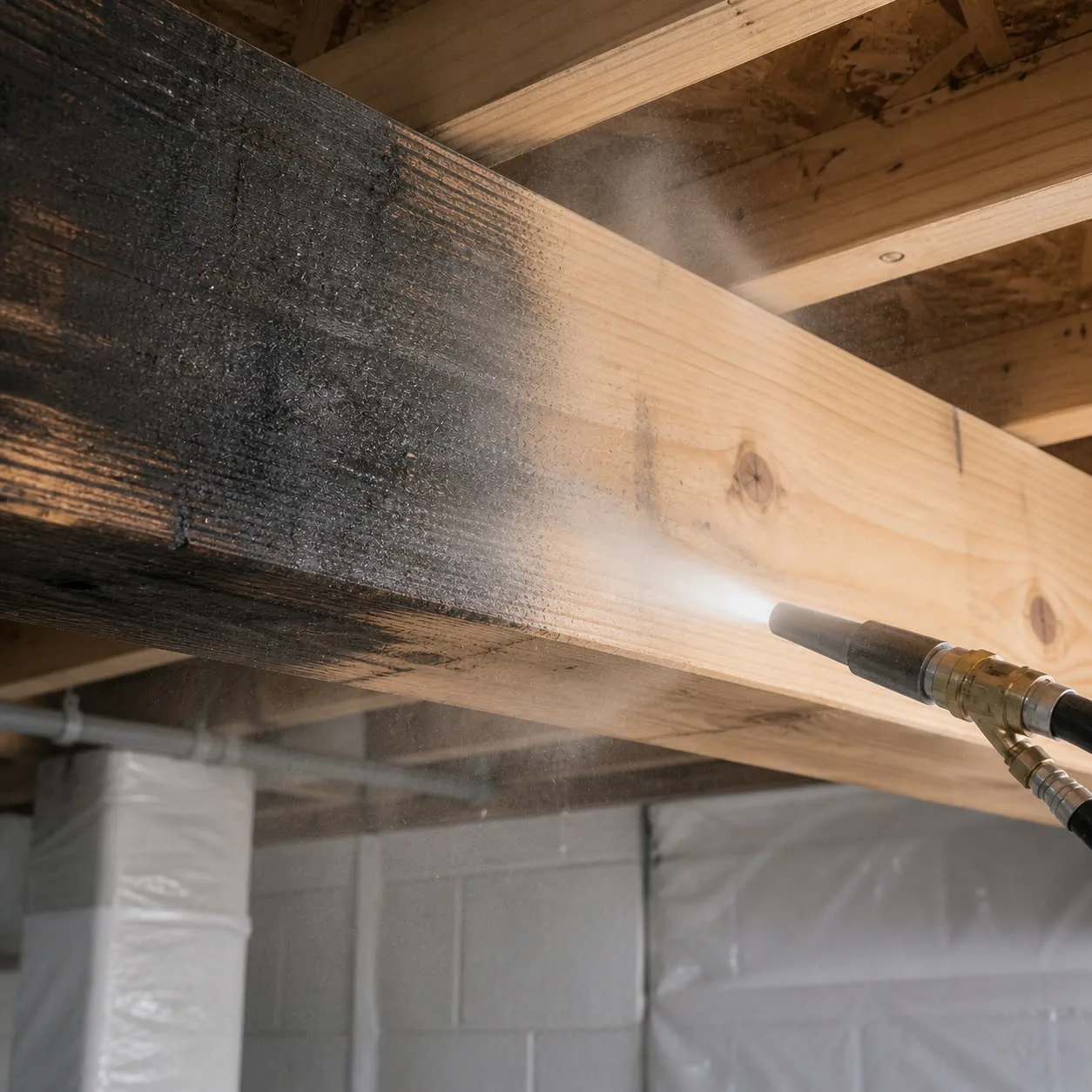
- Mold remediation: Soda blasting removes mold growth from wood studs, joists, and sheathing without damaging the wood fibers, which is critical in structural remediation projects
- Fire and smoke damage restoration: It strips soot and char from wood framing while neutralizing odors thanks to sodium bicarbonate's deodorizing properties
- Food processing equipment: Because it's food-safe and dissolves in water, soda blasting is FDA-approved for cleaning surfaces in commercial kitchens and food plants
- Automotive and delicate metal work: It removes paint, grease, and carbon buildup without warping panels or damaging chrome
- Graffiti removal from brick or stone: Soda blasting lifts paint without etching the masonry
Sandblasting applications include:
- Removing rust and mill scale from steel: The aggressive media cuts through corrosion and creates the surface profile needed for industrial coatings
- Concrete surface preparation: Sandblasting cleans and textures concrete for overlays or coatings
- Stripping heavy industrial equipment: When surface preservation isn't a priority, sandblasting is faster and more cost-effective
- Etching glass or stone: For decorative purposes, sandblasting creates permanent markings
If your project involves porous materials like wood, or if you need to preserve the substrate, soda blasting services are the right call. If you're working with heavy steel, thick rust, or surfaces that need aggressive profiling, sandblasting is the better tool.
Surface Damage, Cleanup, and Cost
Considerations
Surface damage potential is where these methods diverge most sharply. Sandblasting is inherently aggressive it removes material along with contaminants. On softer substrates like wood, it can gouge grain, splinter fibers, and remove too much material. On thin metal, it can warp panels. Soda blasting, by contrast, is non-destructive to most substrates. The sodium bicarbonate particles fracture on impact, which means they deliver their cleaning energy and then break apart rather than continue abrading the surface.
Cleanup requirements also differ significantly. Sand and other traditional blasting media leave behind sharp, angular particles that must be swept, vacuumed, or disposed of as waste sometimes classified as hazardous if the surface being cleaned contained lead paint or other toxins. Soda blasting media is water-soluble, non-toxic, and can often be rinsed away with water. In occupied structures or food-safe environments, this makes cleanup faster and safer.
Cost varies by project scope, but generally speaking, sandblasting is less expensive per square foot when the job involves heavy material removal on durable surfaces. Soda blasting costs more per pound of media and often requires specialized equipment, but it reduces labor time in cleanup and eliminates the risk of substrate damage that would require repair. For homeowners dealing with mold remediation with soda blasting, the ability to treat wood framing in place without replacement often offsets the higher media cost.
Soda Blasting and Sandblasting in Wichita, KS
In south-central Kansas, we see both methods used regularly depending on the industry and application. Agricultural equipment restoration, metal fabrication shops, and industrial facilities around Wichita commonly rely on sandblasting for heavy rust removal and surface prep. Meanwhile, soda blasting in Wichita KS has become the go-to solution for residential and commercial restoration projects especially in older homes with wood framing affected by mold, fire, or water damage. The ability to clean structural components without removing or replacing them is a major advantage in restoration work, and it's why IICRC-certified professionals specify soda blasting for sensitive substrates where sandblasting would cause more harm than good.
Frequently Asked
Questions
What is the difference between soda blasting and sandblasting?
Soda blasting uses sodium bicarbonate (baking soda) as a soft, water-soluble abrasive, while sandblasting uses harder media like silica sand, aluminum oxide, or steel grit. Soda blasting operates at lower pressures and is non-destructive to most substrates, making it ideal for wood, thin metal, and food-safe surfaces. Sandblasting is more aggressive and suited for rust removal, concrete prep, and heavy industrial cleaning.
Is soda blasting better than sandblasting?
Neither method is universally better it depends on the application. Soda blasting is better for delicate surfaces, mold remediation, fire restoration, and projects where you need to preserve the substrate. Sandblasting is better for removing heavy rust, profiling metal for coatings, and cleaning durable materials like concrete or thick steel where surface damage isn't a concern.
When should you use soda blasting instead of sandblasting?
Use soda blasting when you need to remove contaminants without damaging the underlying material. This includes cleaning wood framing during mold or fire restoration, stripping automotive panels, degreasing food processing equipment, or removing graffiti from brick without etching. If the substrate is porous, thin, or needs to remain intact, soda blasting vs sandblasting is an easy choice soda wins.
Does soda blasting damage surfaces?
No, soda blasting is designed to be non-destructive. The sodium bicarbonate particles are softer than most substrates and fracture on impact, so they clean without gouging, warping, or abrading the surface. It's safe for use on wood, glass, chrome, fiberglass, and thin metals. This is why it's the preferred method for restoration work where preserving structural integrity is critical.
How much does soda blasting vs sandblasting cost?
Sandblasting typically costs less per square foot for large-scale industrial projects, often ranging from $1 to $5 per square foot depending on the surface and media. Soda blasting generally costs $3 to $7 per square foot due to the specialized media and equipment, but it reduces cleanup time and eliminates the cost of repairing substrate damage. For restoration projects, the ability to clean in place without replacement often makes soda blasting more cost-effective overall.
Ready to Choose the Right Blasting Method for Your Project?
Whether you're dealing with mold on wood framing, fire damage, or need to strip contaminants from delicate surfaces, Good To Be Clean has the equipment and IICRC-certified expertise to handle it correctly. We'll assess your project, recommend the appropriate method, and complete the work without damaging the materials you need to preserve. If you're in the Wichita metro, Butler County, or surrounding south-central Kansas communities, call us at (316) 320-6767 or visit our soda blasting services page to discuss your project and get a clear, honest estimate.
For water damage restoration in Wichita, call (316) 320-6767 right now. We also provide mold remediation, air duct cleaning, carpet cleaning, soda blasting, and vapor barrier installation throughout Wichita and Sedgwick County.