What Is Remediation Mold Removal and How Does It Actually Work?
If you've searched "remediation mold removal," you're likely past the discovery phase and trying to understand what comes next. Remediation is the industry-standard term for professionally addressing mold contaminationnot just wiping it away, but removing the source, containing the spread, and restoring your property to safe conditions. In homes and businesses across Wichita and south-central Kansas, where humidity and storm-related water intrusion create ideal conditions for mold growth, understanding this process matters. Good To Be Clean is IICRC certified, which means our teams follow established protocols that go far beyond what general contractors or DIY methods can accomplish. This post walks through what remediation mold removal includes, why terminology matters, and what you should expect from start to finish.
Why "Remediation" Is the StandardNot Just "Removal"
The terms aren't interchangeable. Mold removal suggests you can eliminate every mold spore from a building, which isn't realisticmold exists naturally in almost every environment. Remediation, by contrast, refers to bringing mold levels back to normal, safe concentrations by addressing the contamination and its source. The certified mold remediation process includes containment, air filtration, removal of affected materials, antimicrobial treatment, and verification testing. It's a controlled, multi-step system designed to prevent cross-contamination and recurrence.
IICRC-certified technicians follow the IICRC S520 Standard, a science-backed framework that dictates how to assess mold damage, protect unaffected areas, remove contaminated materials safely, and document the work. General contractors may scrape off visible mold or spray bleach, but without proper containment and HEPA filtration, they often spread spores to clean areas. Professional mold remediation services use negative air pressure, sealed barriers, and post-remediation clearance testing to confirm the job is done right.
The Complete Mold Remediation Process: What Happens
Step-by-Step
The remediation process typically follows this sequence:
Inspection and Assessment: A certified technician identifies the extent of contamination, the mold type (if testing is warranted), and the moisture source. This isn't guessworkit involves moisture meters, thermal imaging, and visual inspection of hidden areas like wall cavities and crawlspaces.
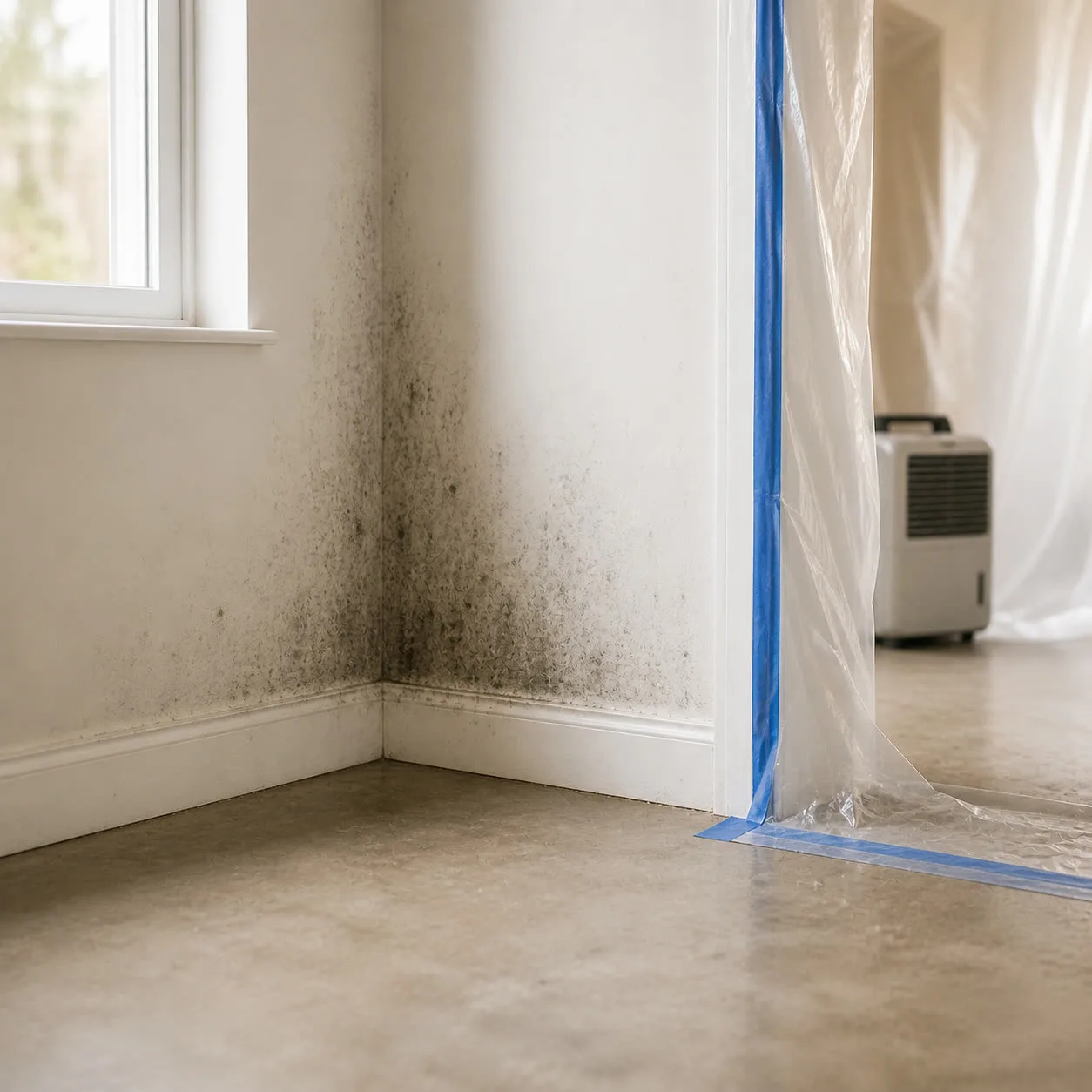
Containment: Physical barriers and negative air machines prevent mold spores from migrating during removal. Containment zones are sealed with plastic sheeting, and HEPA-filtered air scrubbers create negative pressure so airborne spores are captured, not spread.
Air Filtration: HEPA filters capture particles as small as 0.3 micronsmold spores included. This runs continuously during the work.
Removal of Contaminated Materials: Porous materials like drywall, insulation, and carpet that can't be salvaged are removed and disposed of properly. Non-porous surfaces are cleaned with antimicrobial solutions.
Cleaning and Treatment: All surfaces in the affected area are HEPA-vacuumed and treated. Personal belongings are cleaned or discarded based on contamination level.
Drying and Dehumidification: Since mold needs moisture, the source must be eliminated. This often ties directly to water damage restoration, especially after leaks, flooding, or roof damage.
Verification and Clearance Testing: Post-remediation air quality testing or visual clearance confirms the environment is safe to rebuild.
This is why choosing a certified provider mattersshortcuts in any phase can lead to recurring mold or health risks.
How Long Does Remediation Take and What Does It Cost?
Timelines depend on the size and severity of contamination. A small, localized area (like a bathroom corner) may take 13 days. Larger projectssuch as mold remediation in El Dorado KS following a basement floodcan take a week or more, especially if structural drying and reconstruction are involved.
Cost varies based on square footage, material removal, and the complexity of containment. Most residential jobs range from $1,500 to $6,000, though extensive contamination in commercial properties can run higher. Attempting DIY mold removal often costs more in the long run when the problem returns or spreads, requiring a full professional intervention later.
One factor many overlook: if the moisture source isn't fixed, mold will return. That's why remediation teams address both the mold and the underlying cause, whether it's a leaking pipe, poor ventilation, or lingering moisture from water damage.
What Mold Remediation Looks Like in Wichita and Surrounding
Communities
In south-central Kansas, mold problems often stem from severe weatherflash flooding, roof leaks during storm season, and high indoor humidity in older homes without proper ventilation. Basements and crawlspaces are especially vulnerable. According to the Kansas Department of Health and Environment, indoor mold growth is one of the top contributors to poor indoor air quality in the region, particularly after water intrusion events.
Local conditions mean remediation often overlaps with water damage restoration, especially after spring storms or plumbing failures. Addressing both issues simultaneously prevents recurring contamination and protects your property value. IICRC-certified teams understand the regional risks and tailor the remediation approach to Kansas homes and businessesnot a one-size-fits-all national checklist.
Frequently Asked
Questions
What does mold remediation include?
Mold remediation includes inspection, containment, air filtration, removal of contaminated materials, antimicrobial cleaning, drying, and post-remediation verification. The goal is to restore mold levels to safe, natural concentrations and eliminate the moisture source to prevent recurrence. Certified teams follow IICRC S520 standards throughout the process.
Is mold remediation the same as mold removal?
No. Mold removal implies eliminating all mold, which isn't possiblemold spores exist naturally. Remediation focuses on returning mold to normal levels and addressing contamination safely through containment, proper removal, and source correction. The term "remediation" reflects the professional, science-backed approach to the problem.
How long does mold remediation take?
Most residential mold remediation projects take 15 days, depending on the contaminated area's size and the extent of material removal. Complex cases involving structural damage or large commercial spaces may take longer. Drying time and post-remediation testing can extend the timeline if moisture levels remain high.
What should I expect after mold remediation?
After remediation, you should receive documentation of the work completed, including photos, air quality test results (if performed), and a summary of materials removed. The area should be dry, visibly clean, and free of musty odors. Any reconstructionlike replacing drywalltypically follows clearance verification.
Is mold remediation worth it?
Yes. Professional mold remediation protects your health, prevents structural damage, and maintains property value. DIY methods often fail to address hidden contamination or the moisture source, leading to recurrence. IICRC-certified remediation ensures the job is done correctly and reduces liability, especially in commercial properties or rental units.
Ready to Address Mold the Right Way?
If you're dealing with visible mold, musty odors, or recent water damage, don't wait for the problem to grow. Good To Be Clean provides certified mold remediation backed by IICRC training and real-world experience across Wichita, Butler County, and surrounding Kansas communities. Our teams follow the full remediation processfrom containment to clearanceso you know the job is done right the first time. Call (316) 320-6767 or visit our mold remediation services page to schedule an inspection and get back to a safe, healthy environment.
For water damage restoration in Wichita, call (316) 320-6767 right now. We also provide mold remediation, air duct cleaning, carpet cleaning, soda blasting, and vapor barrier installation throughout Wichita and Sedgwick County.